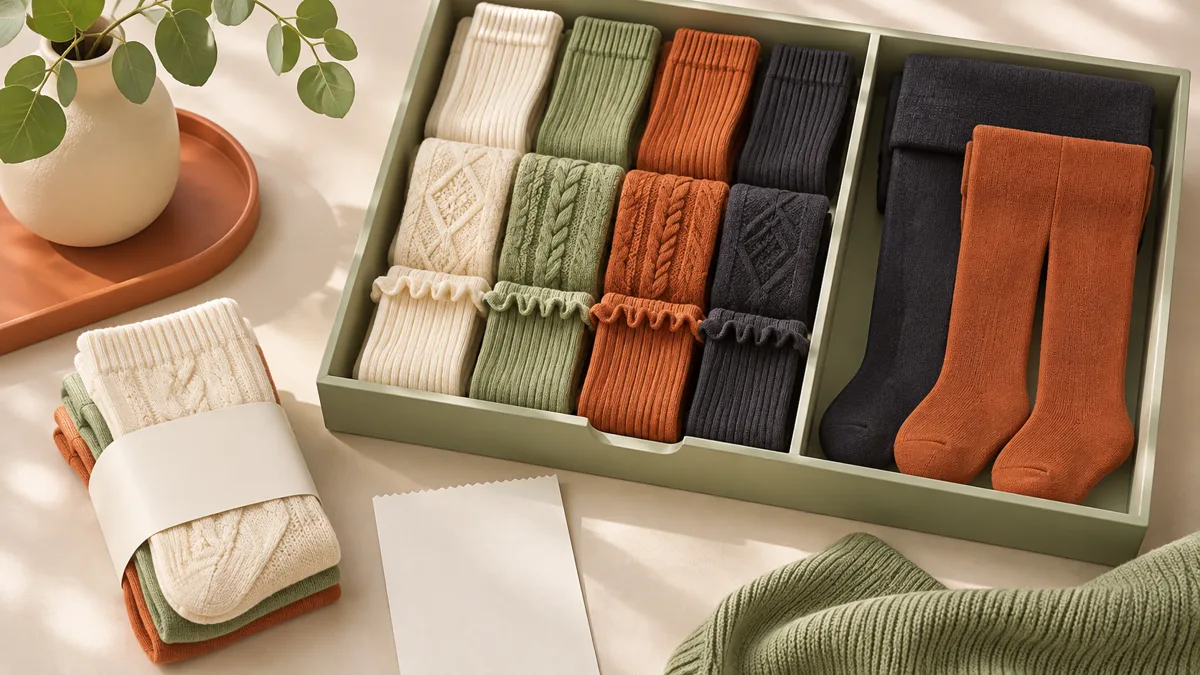
Choose the supply category
Count complete matching sock pairs for a sock offer and complete tights garments for the selected tights offer. Do not mix categories into one generic pair total. The tool keeps the selected style, size, color and selling count visible. Changing the product clears the target, stock and confirmation so an earlier number cannot silently transfer to another garment.
State the target yourself
The planner enters a chosen whole-unit target and actual matching unused stock. We do not derive the target from age, school days, laundry frequency or expected growth. For a 25-pair sock target and 5 matching pairs in stock, the gap is 20 pairs. The arithmetic is useful without pretending to recommend how much clothing a child should own.
Round purchases to actual packs
With the selected ten-pair Hanes offer, a 20-pair gap requires two packs. With the six-pair Jefferies offer, it requires four packs, adding 24 pairs. The output shows 4 pairs above the chosen target after stock is included. That overage is pack rounding, not evidence that more pairs are medically necessary or that some will inevitably be lost.
Keep tights distinct
The selected 1500 offer supplies one garment per selling unit. A target of three garments with one matching garment in stock requires two selling units. Do not count its two legs as separate inventory or use a sock-pack factor. The displayed unit changes with the selection, and the planner must confirm the actual matching product again.
Do not count uncertain items
An unmatched sock, a worn item or a garment with unclear size identity does not meet this tool's confirmed unused-stock definition. Keep those items in a separate private record if needed. The website does not inspect their condition or decide whether they remain appropriate. Counting them as confirmed stock could make the mathematical order gap look smaller than the actual chosen inventory gap.
No time or growth forecast
The tool gives no days-of-supply estimate, no recommended replacement interval and no size-up schedule. A target that is met simply produces zero additional packs. It does not instruct the user to wear, discard or store existing items for a particular duration. Actual care, condition and individual fit remain separate questions.
Use the output for a purchase review
Multiply whole packs by an actual entered pack price to obtain a modeled merchandise amount before unknown charges. Recheck current selected size availability and seller terms before buying. The tool submits no order, stores no child's information and guarantees no fit. Independent content and selected-label review remain pending.
A target-crossing example
Suppose the chosen target is fourteen complete matching pairs and five usable pairs are already held. Nine more are wanted. A six-pair pack requires two whole packs, adding twelve pairs and producing a final count of seventeen. Three pairs exceed the chosen target. The arithmetic does not call that excess waste or a recommended reserve;the user decides whether the pack format suits the purchase.
Sources & scope
Checked November 4, 2026. Manufacturer and retailer references support the specific statements. Dated displayed prices are not final checkout quotes, performance rankings or performance testing. This shopping reference does not replace the exact product label or qualified individual advice. Exact selected labels and independent content/commerce review remain pending.
Target: Hanes Premium Crew Black M,81462443 ↗
Keep reading
Pairs, pieces and tights garments are different counting units ↗
Price per pair is not price per wear or a durability result ↗
A drawer inventory is not a growth or replacement schedule ↗